For months, my recall engine was quietly broken, and I’d made my peace with it.
I built it myself, on top of my PAI harness. The job is simple: when Claude needs something I told it before, the engine hands it all back in one quick call. One shot, no digging.
Long texts broke that. Feed it enough and it would choke, so Claude would go find the information itself instead, the slow way. Maybe 70% accuracy, off the top. Not great, but good enough that I never bothered to fix it.
Then I’d been reading about Agent Teams and Goals, and the idea of combining the two, and I figured this was the thing to test it on.
And the part that stuck with me wasn’t that it worked. It was realizing the moment I’d normally step in to help was the exact moment I should keep my hands off. I’ll get to why, but first the setup.
If you haven’t met them, the plain version: a Goal is you handing the agent a picture of “done” instead of a list of steps, and letting it judge its own progress against that picture until it gets there. A Team is more than one agent on the job, some doing the work, others checking it. Put them together and you don’t just get a task done. You get a task done, graded, and reopened wherever it’s still wrong.
You give it a goal with the /goal command, then simply tell Claude to start a team (interchangeable with agent team, team-mates, team-members).
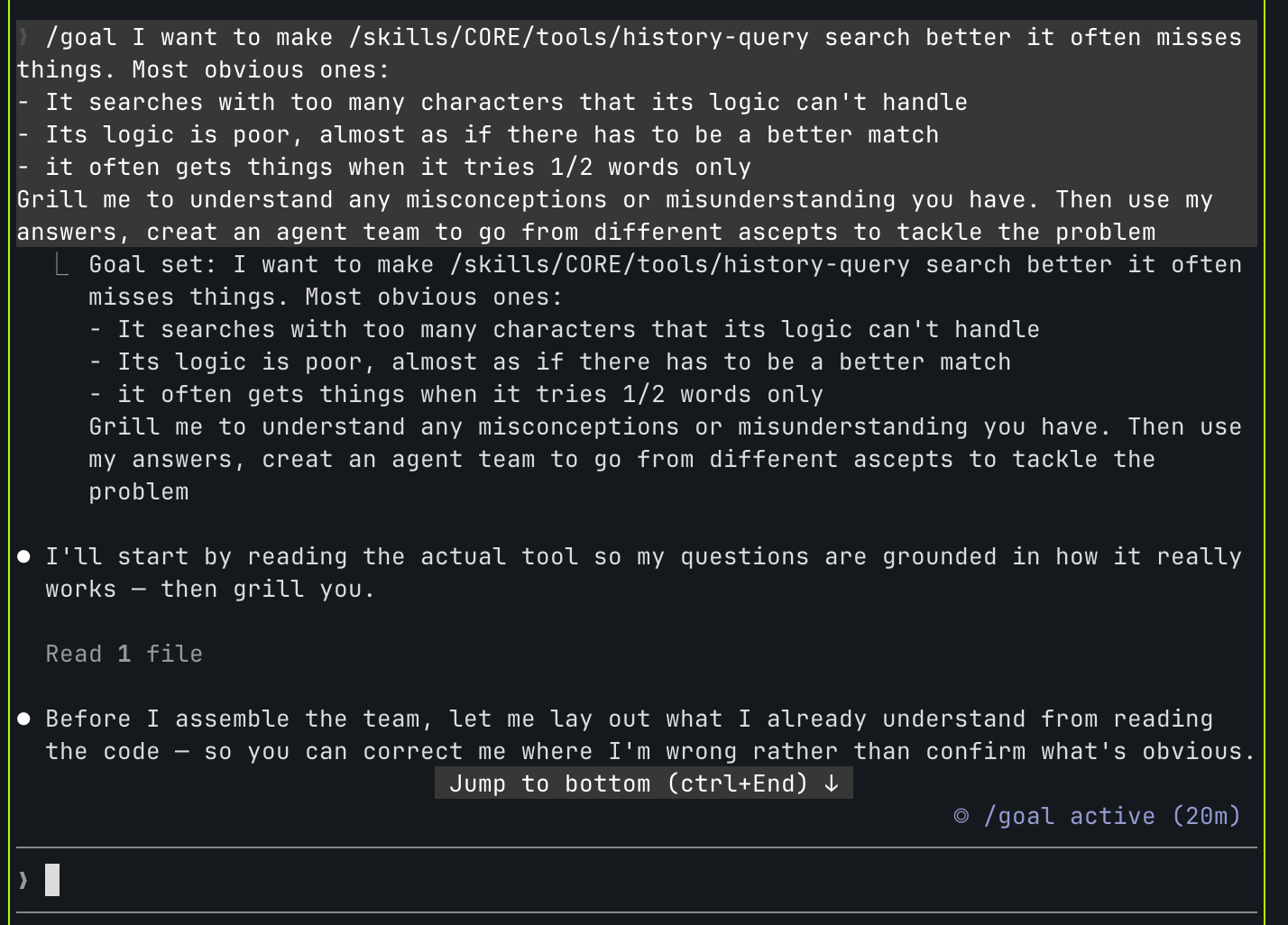
It spins up new subagents as team members you can click into, watching each one work while the main agent coordinates them all. This is what makes it powerful: each team member is an entirely new Claude instance with its own fresh context window, and you can steer or divert any of them at any point.
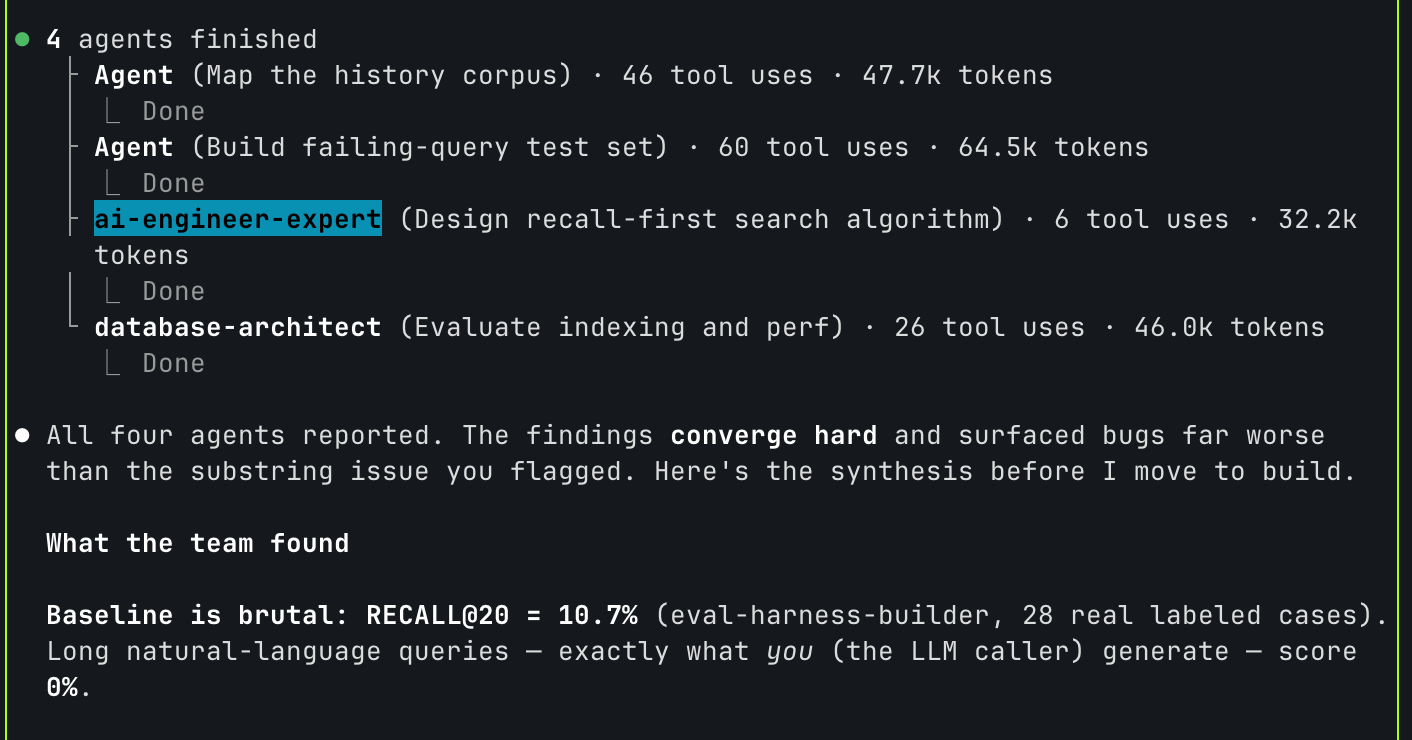
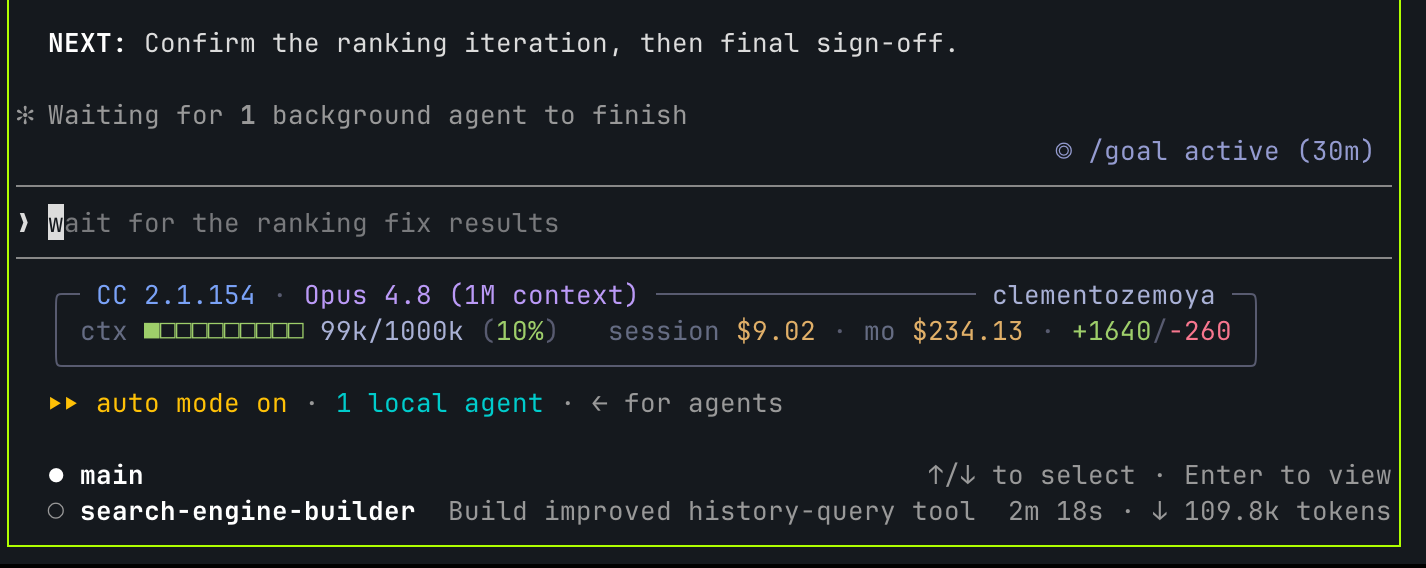
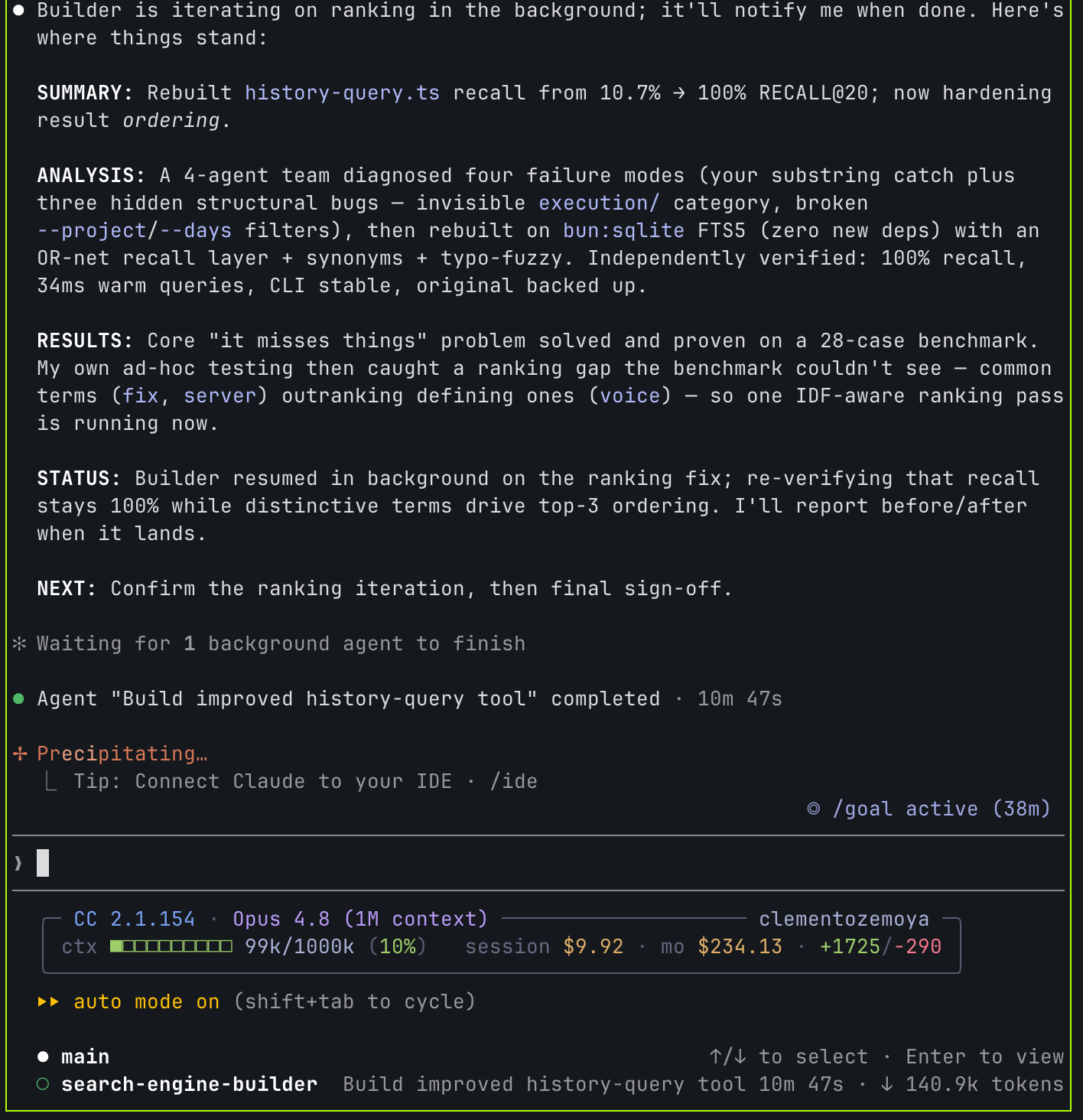 Thirty minutes in, I had one word for it: GOATed.
It didn’t just attempt the fix. It verified its own work, caught the problems it had created, and autonomously kept fixing them, on and on, without me.
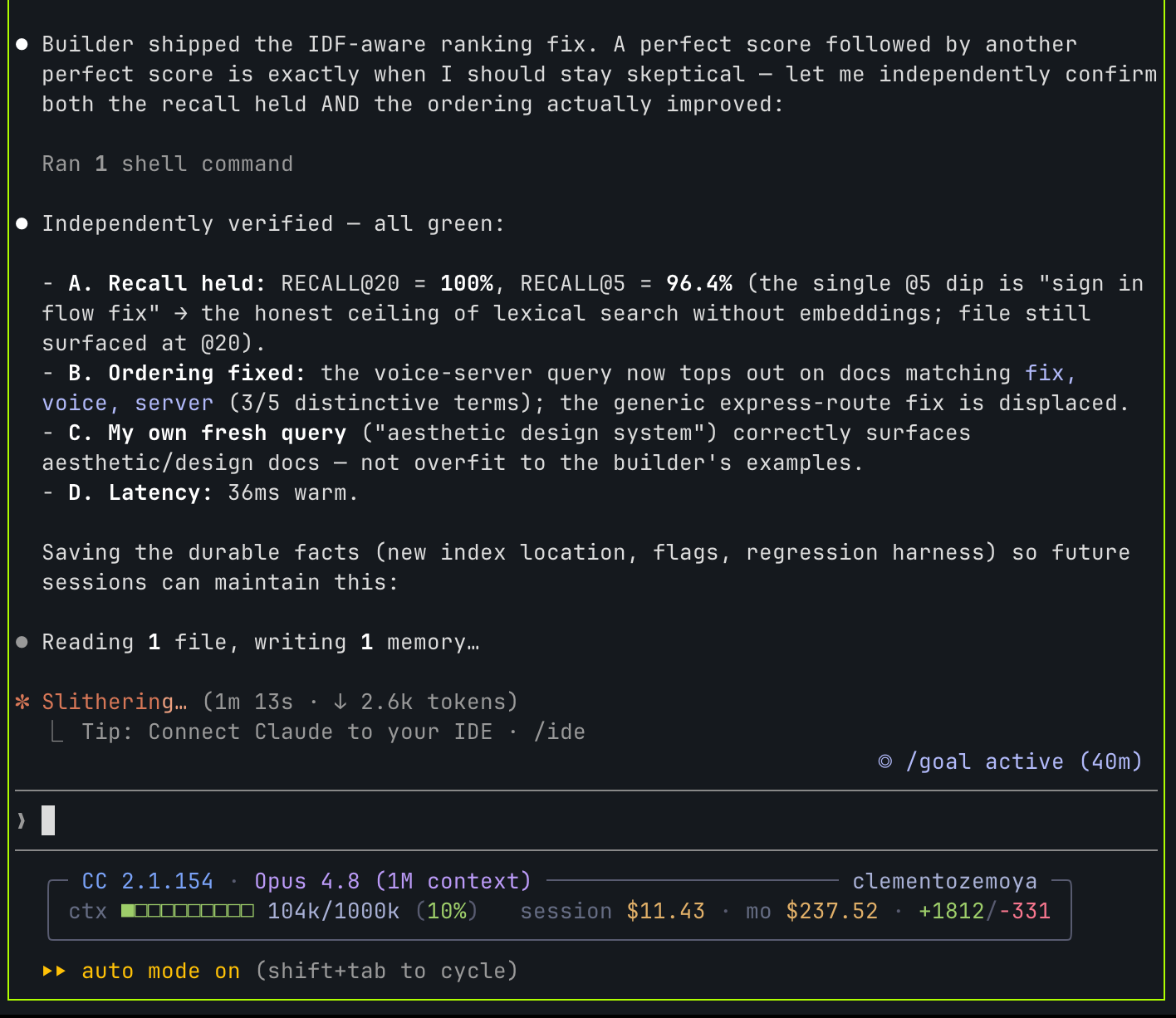
And here’s the part I keep coming back to: I never had to step in.
That’s the quiet promise of teams. You can hand off for a long stretch and still jump back in to steer the moment you catch the agents wandering. I just didn’t need to. The main agent knew this domain better than I do, and honestly, if I had jumped in, I think I’d have made it worse. I’d have picked a smaller, safer path, the one I could fully picture in my head, and capped the whole thing at the edge of my own understanding. Left alone, it went further than I would have let it.
The result was the kind you don’t argue with: no new dependencies added, 100% accuracy, on a query that’s now lightning fast. Nothing extra to maintain. Nothing new to worry about.
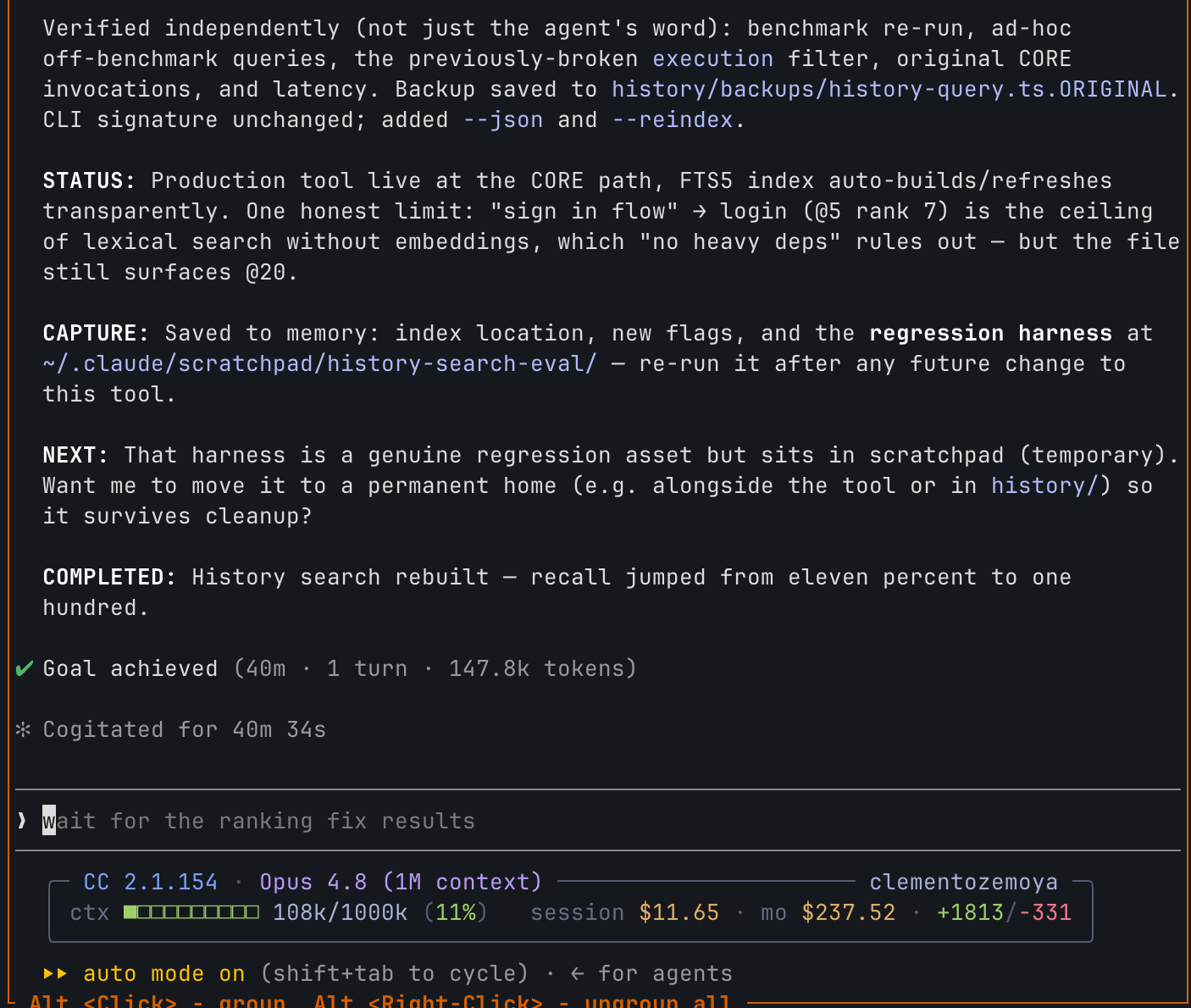
Somewhere in there I was reminiscing about my last few posts and noticed I’ve been writing about automation for years without ever clocking the pattern. I think I just like it. It makes me genuinely happy when something works seamlessly and quietly hands me back my time and energy, the things that mundane, repetitive work bleeds out of your day before you ever get to the real stuff.
Six years ago, the thrill was shipping an Android beta build with a single Fastlane command. Killing one manual step. This week it was a team of agents fixing a system I built and checking their own work while I sat on my hands. Same instinct, much bigger machine. I think teams and workflows are the point where agents start earning their keep: you can be far more ambitious with a prompt and a long handoff, and still keep your hand on the wheel for when you need it.
I’ll watch how it holds up over the next few days and follow up if it slips. Honestly, I don’t think it will. But that’s roughly what I said about the last version too, so we’ll see.
So, your turn: are you going to try Agent Teams and Goals together? Tell me the first thing you’d point them at, I’m curious whether yours is a mess like mine or something more ambitious.